David Darrault
David Darrault

De Rouen au Havre, au fil de l'estuaire

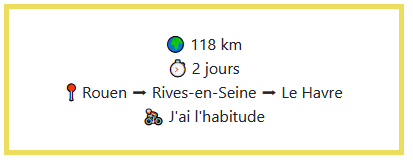
🚝 Gare de Rouen > Gare du Havre
David Darrault

1er jour > De Rouen à Rives-en-Seine 🍏 (55 km)

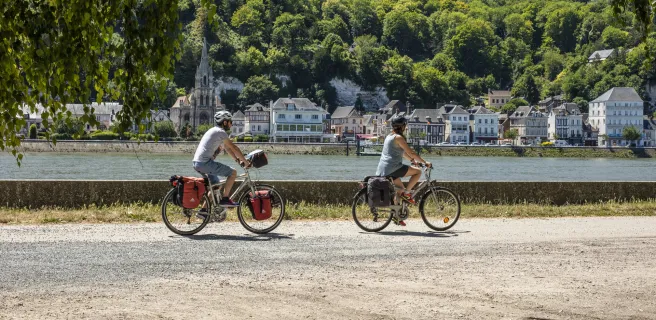
Avant de quitter Rouen, ne manquez pas le Gros Horloge, la cathédrale et le Musée des Beaux-Arts qui accueille une riche collection de tableaux impressionnistes. Vous longerez le fleuve à la découverte du patrimoine industriel de Rouen, premier port céréalier d'Europe, avant d'emprunter le bac pour rejoindre le charmant village de La Bouille. Vous êtes à présent sur la Route de Fruits, profitez des ventes des arboriculteurs locaux (pommes, cerises, groseilles, framboises...). Reprenez le bac à Duclair pour profiter du bourg commerçant et de la voir verte qui passe à proximité du Château du Taillis et son musée Août 44. Descendez ensuite à Jumièges pour découvrir l'Abbaye, la plus belle ruine de France, et son parc. Poursuivez sur la rive droite de la Seine. Ne manquez pas l'abbaye de Saint-Wandrille et sa bière brassée artisanalement, avant de vous rapprocher au plus près des la Seine le long de la voie verte qui va jusqu'à Caudebec-en-Caux, vous pourrez visiter le Muséoseine. Faites halte dans les nombreuses chambres d'hôtes de ce charmant village de bord de Seine. Envie de nature ? Le camping Barre-Y-Va propose un cadre naturel et confortable.

David Darrault

2ème jour > De Rives-en-Seine au Havre 🏛️ (63 km)

Reprenez votre route par la voie verte qui vous mènera jusqu'à Villequier où vous pourrez visiter le musée Victor Hugo. Enfin, arrivés à Lillebonne, ne manquez pas de vous arrêter à l’ancien théâtre romain et au musée Juliobona qui retrace l'histoire antique de cette ville. Poursuivez votre chemin en suivant la départementale vers Oudalle. Ralentissez à Harfleur pour admirer les maisons médiévales puis continuez vers Le Havre pour une découverte de l'architecture d'Auguste Perret, le maître du béton, la pierre du XXe siècle consacrée par l'Unesco. Ne manquez pas les musées havrais.
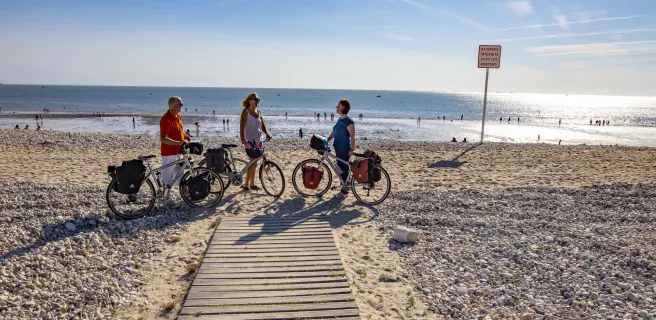
La mer vous attend pour une baignade bien méritée ou une déambulation sur la digue de promenade et le quai Southampton. N'hésitez pas à faire une pause au restaurant/bar l'Havrais bière. De nombreux hôtels labellisés vous accueillent ! Un souci technique, faites appel à Recycle vélo

Custom route

Custom route

Rouen / La Bouille

9 Rouen / La Bouille

20 km
1 h 18 min
I begin / Family
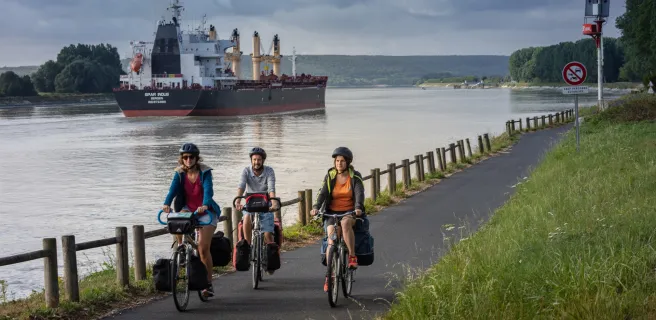
Leaving the bell towers of Normandy’s capital behind, cranes take over the skyline, signalling Europe’s largest port for the exporting of cereals. Enormous cargo vessels, some almost 300m in length, load up here. Gradually, heading west, the atmosphere changes, as typical Norman villages with old sandstone and timber-frame houses follow. You arrive in the heart of the Parc Naturel Régional des Boucles de la Seine Normande, where the relaxing feel is added to by the slow coming and going of vessels. Before boarding the ferry across the Seine to reach La Bouille, stop to see the gardens at the Château de Soquence, with a beautiful viewpoint over the river. On the other bank, you can spot the Château de Robert le Diable, historic guardian of this Seine meander. La Bouille, birthplace of 19th-century writer Hector Malot, proved a source of inspiration for Impressionist painters and makes a lovely place to stop.
La Bouille / Jumièges

10 La Bouille / Jumièges

35 km
2 h 19 min
I cycle often
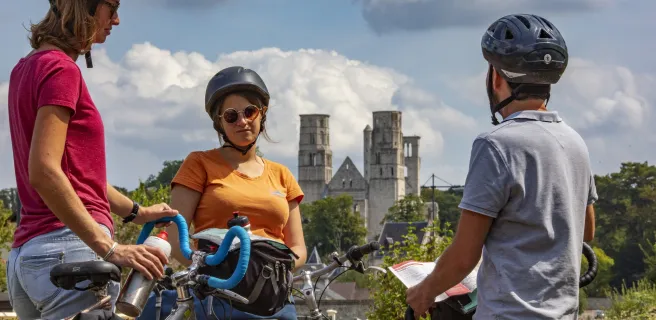
The Seine à Vélo cycle route leaves a spot so special to the Impressionists to follow the Route des Fruits, or Fruit Route. As well as admiring apple, pear, plum and cherry orchards, bearing fruit in different months, make the most of a trip into the heart of the Parc Naturel Régional des Boucles de la Seine Normande to visit local producers. Foodies might plan a special stop in the riverside town of Duclair, to taste its traditional speciality, pressed duck. If keen on history, visit the Château du Taillis, its museum dedicated to the war in Normandy in August 1944. End this stage in style, taking your bike on the ferry over to Yville-sur-Seine to reach the village of Jumièges, dominated by one of Normandy’s most remarkable medieval Benedictine abbeys. Victor Hugo described it as ‘France’s most beautiful ruin’. In this contemplative spot, enjoy a reflective pause before embarking on the last stages of the route, either heading to Le Havre along the north bank of the Seine Estuary, or to Honfleur and Deauville along the south bank.
Jumièges / Lillebonne

11 Jumièges / Lillebonne

45 km
2 h 58 min
I cycle often
With this stage, leave behind Jumièges and ‘the most beautiful ruin in France’, as Victor Hugo described its abbey, to continue west along the Seine à Vélo via a former rail line, now a greenway, connecting Caudebec-en-Caux to Barentin. Arriving at Caudebec-en-Caux, make the most of the calm of the Seine’s banks, following in the footsteps of Victor Hugo. Reaching Villequier, where the Hugo and Vacquerie families holidayed, this charming village makes a perfect place to pause and find out more about the great author’s writings. This stage’s last stretch leads to Lillebonne. This town has an older, Roman name, Juliabona, hence the remnants of a Roman theatre, plus a museum covering the history of the Gallo-Roman settlement here.
Lillebonne / Le Havre

12 Lillebonne / Le Havre

42 km
2 h 33 min
I cycle often
Riding beside the Seine for its final kilometres, see how the mighty river grows much wider. The port of Le Havre and the département (county) of Calvados are now just a short ride away. This last stage of the Seine à Vélo takes you under the impressive Tancarville Bridge. Pause to admire this architectural wonder, suspended 123 metres above you. Completed in 1959, it was the first great bridge built to span the Seine between Rouen and Le Havre. The greenway runs beside the canal parallel to the Seine, with views of fields, industry and cliffs. In the distance rises the Pont de Normandie. Nearing the end of the route, the historic heart of Harfleur, with its medieval houses, is worth exploring before entering Le Havre. This port’s centre, destroyed in World War II, was rebuilt according to the plans of architect Auguste Perret. The place has been declared a UNESCO World Heritage Site in recent times. Arriving at Le Havre’s pebble beach, you might take a well-deserved dip in the sea, or enjoy wandering along the seafront.